Type 2 Fun in the Andes: Managing Blisters, Cold, and Scree in the Blanca
At Andeando Peru, we don’t sugarcoat the Andes. We know that the biting 4 AM alpine wind at Punta Unión doesn’t care about your fitness level, and a single hot spot on your heel can turn the Santa Cruz Trek into a slow-motion nightmare. Managing the “suffering” is part of the craft.
But here’s the thing: you don’t have to endure it alone. Let’s be brutally honest for a second: most hikers fail in the Blanca not because they aren’t “tough” enough, but because they lack the niche systems to handle the friction, the frost, and the vertical miles. Trust me on this one, I’ve seen seasoned climbers forced to turn back just miles from the summit because they ignored a small blister on day one.
1. The Scree Dance: Mastering the “Vertical Treadmill”
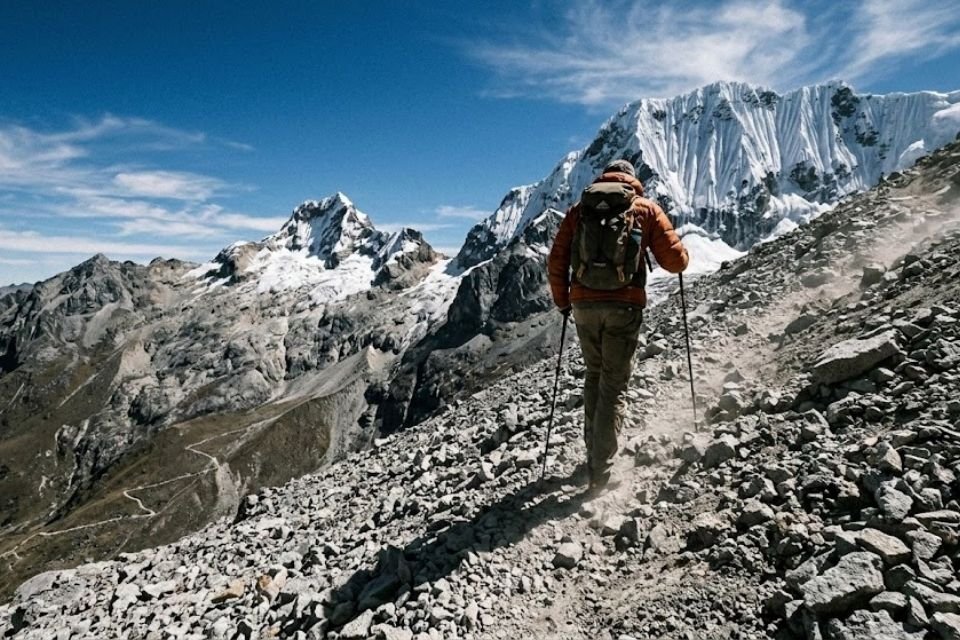
Scree—the loose, ankle-deep rock that covers our high passes—is the ultimate test of patience. For every two steps up, you slide one step back. It’s exhausting, and if your technique is wrong, it’s a recipe for a knee injury.
- The Vibe: Frustrating, unstable, and steep.
- The Pro-Tip: Shorten your stride and keep your weight over your center of gravity. We teach our clients the “rest step”—a rhythmic pause that saves your quads from burning out.
- The Secret: It’s all about the descent. “Scree skiing” is an art form. Soft knees and confident heels turn a treacherous slide into a controlled, fast descent.
2. Blister Prevention: The “Hot Spot” Rule
In the thin air of the Andes, your skin behaves differently. Dehydration makes your feet more prone to friction. Once a blister pops, the risk of infection at altitude is significantly higher.
The reality? If you feel a “hot spot,” you stop immediately. Not in ten minutes. Now. At Andeando Peru, our guides are trained in advanced wilderness foot care. We don’t just carry a first aid kit; we anticipate the friction before it breaks the skin using Leukotape and specific wool liner strategies.
3. Managing the Cold: The “Action Suit” Strategy
When the sun drops behind Mount Huascarán, the temperature in the Blanca doesn’t just fall—it crashes. We’re talking about a 20°C (68°F) swing in less than an hour. The secret is the “Action Suit”: you should feel slightly cold when you start hiking. If you’re warm at the trailhead, you’re wearing too much and you will sweat, which leads to a deep chill later.
Type 2 Fun: Survival vs. Success
The Challenge Solo Struggle The Andeando Way Scree Slopes Exhaustion & falls Pacing & rest-step coaching Foot Care Self-treated (too late) Proactive taping & monitoring Morning Cold Frozen boots Hot coffee & warm mess tent Pack Weight 20kg+ load 6kg (Daypack only) Local Tip: Don’t bring brand-new boots to Huaraz. The Cordillera Blanca is a brutal place to “break them in.” Wear them for at least 50 miles back home before you step onto our granite trails.
❓ Quick Answers for the Tough Hikes
Is the scree really that bad?
On trails like the Huayhuash Circuit, yes. It can be demoralizing. But with trekking poles and the right footwork, it becomes a rhythmic meditation. We show you exactly where to plant your poles to maximize stability.
What if I’m not “hardcore” enough?
That’s a myth. Most of our clients are regular people with a sense of adventure. We manage the “miserable” parts (the heavy lifting, the cooking, the navigation) so you can focus on the reward of the high peaks.
Turn your struggle into a legendary story.
We don’t remove the challenge, but we provide the safety net that ensures your adventure ends with a celebration, not a rescue.