Water Filtration on the Santa Cruz Trail: How We Keep Our Trekkers Safe
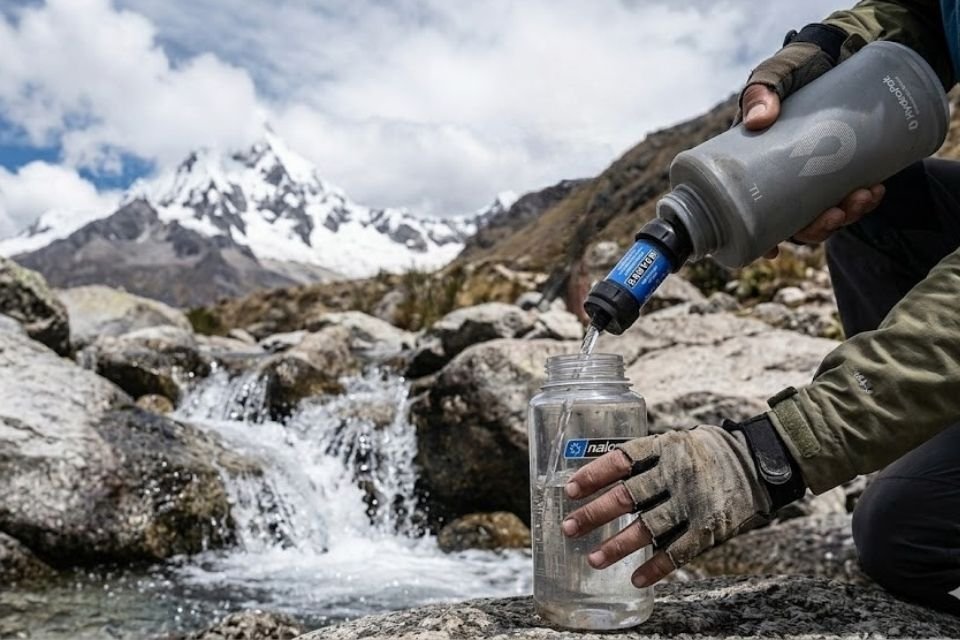
At Andeando Peru, we treat water safety as a non-negotiable pillar of our logistics. A single bout of “Huaraz Belly” doesn’t just ruin your day—it can end your entire Santa Cruz Trek at the first pass. We don’t just hope the water is clean; we ensure it is through a multi-stage filtration protocol that exceeds international safety standards.
But here’s the thing: most agencies rely on simple chlorine tablets that leave a chemical aftertaste and take 30 minutes to work. Let’s be brutally honest for a second: if you’re thirsty at 4,200m (13,780ft), you don’t want to wait for a pill to dissolve. Trust me on this one, I’ve seen hikers drink straight from a “clean-looking” spring only to be evacuated two days later with severe dehydration.
The Andeando Protocol: Our 3-Step Safety System
We don’t take chances with your health. Every drop of water served at our camps—from your morning coffee to your evening Nalgene refill—undergoes a rigorous process.
- Source Selection: Our AGMP-certified guides bypass stagnant pools and select only fast-moving, high-elevation glacial runoffs.
- Physical Micro-Filtration: We use high-flow hollow fiber membrane filters (99.999% bacteria removal) that preserve the natural, crisp taste without chemicals.
- The Boiling Rule: For all cooking and hot drinks, we maintain a sustained “Rolling Boil,” accounting for the lower boiling point at high altitudes like Taullipampa.
Why “Clean” Isn’t Enough: The Mineral Factor
Andean water is high in minerals. While not harmful, it can be tough on a traveler’s stomach. By using high-quality filtration instead of just iodine, we preserve the electrolyte balance while removing biological risks, helping with acclimatization by keeping you hydrated without “chemical fatigue.”
Side-by-Side: The Risk Breakdown
Feature Untreated Stream The Andeando Standard Bacterial Risk High (Livestock) Zero (Filtered & Boiled) Taste Metallic / Earthy Natural Glacial Freshness Wait Time 30 mins (Tablets) Instant Filtration Eco-Impact Plastic Waste (Bottled) Zero Waste (Sustainable) Local Tip: Never take water from a stream where you can see cows or donkeys upstream. Always look for the “hidden” side-streams coming directly off the granite rock walls.
❓ Your Water Safety Questions Answered
Do you use UV purifiers?
UV systems can fail in cloudy glacial water. We prefer physical filtration and boiling as they are fail-proof even when water carries silt.
Is the water safe for coffee and tea?
Yes. Every drop of water in our kitchen tent is boiled. We treat kitchen hygiene with the same intensity as our mountain safety.
Hydration is the Key to the Pass
Reaching Punta Unión (4,750m) requires your body to be at 100%. Dehydration mimics altitude sickness—it causes headaches, fatigue, and nausea. By providing the cleanest water on the trail, we remove one of the biggest variables that can stop a trekker in their tracks.
That’s why our local team in Huaraz invests in top-tier gear. We want you to focus on the towering walls of Mount Taulliraju, not on whether your next sip of water is safe.
Ready to taste the purest water in the world, safely?